
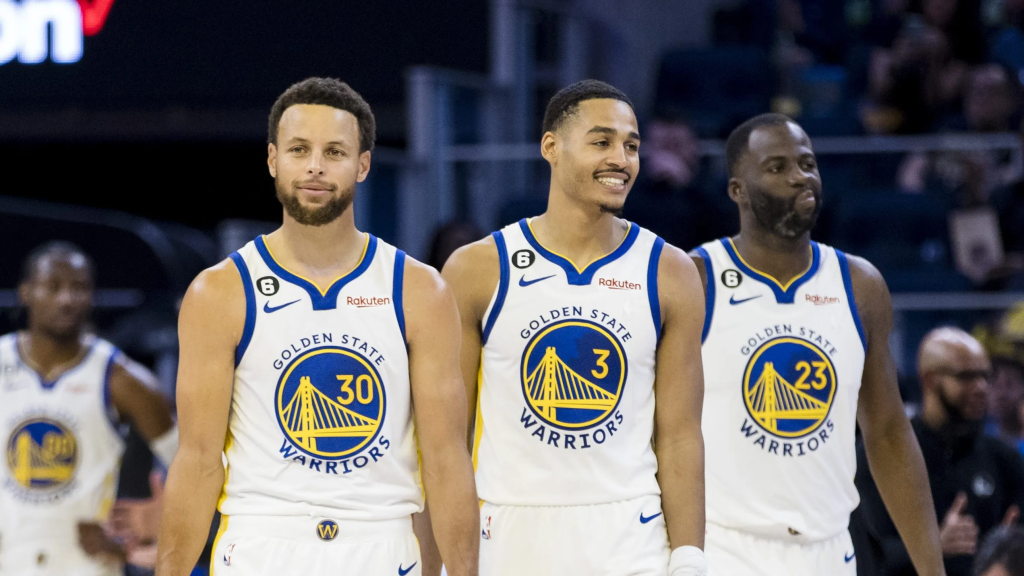
The Warriors roster is in a stranger place than the box scores suggest, and the team is still figuring out what it actually is without Klay Thompson in the lineup.
Thompson’s departure to Dallas last offseason was quietly significant in a way that didn’t get enough attention at the time. He wasn’t just a shooter — he was a particular kind of shooter, one who spent fifteen years learning exactly how to move without the ball in Steve Kerr’s system, when to curl, when to fade, when to stand in the corner and wait for the defense to forget about him. He averaged over 20 points a game multiple times in his career while taking some of the most efficient shots on the floor. Replacing that isn’t a matter of finding someone who can make threes. It’s finding someone who makes threes the right way, in the right spots, with the same economy of movement. The Warriors haven’t solved that yet, and on nights when the offense stalls, that’s usually where the breakdown starts.
Draymond Green is the part of this team that casual viewers undervalue most consistently. He hasn’t been a significant scoring threat for years, and he doesn’t need to be — that’s not the point of him. What he provides is harder to quantify and more important. He reads the game at a speed that most players don’t operate at, communicating rotations before they’re needed, identifying mismatches before they develop, making decisions in transition that look instinctive but are actually the product of fifteen years of playing the same system with the same coach. Offenses that appear disorganized against the Warriors are usually disorganized because Green has already diagnosed what they’re running and put his teammates in position to disrupt it. When he’s suspended or injured, Golden State doesn’t just lose a defender. It loses the person who makes everyone else’s defense coherent.
Curry’s relationship with the roster around him has shifted subtly but noticeably. During the championship years, he was surrounded by players who had spent a decade learning his tendencies — when he was going to reject a screen and pull up, when he was going to use it and drive, when to expect the pass back after the handoff. That institutional knowledge takes years to build and can’t be transferred in a summer. The younger players sharing the floor with him now are still learning what the veterans knew automatically, which means Curry occasionally has to slow down and simplify in situations where he used to be able to improvise.
The depth behind the core has genuine talent scattered through it — players capable of useful stretches, strong individual matchups, surprising performances on given nights. Moses Moody has shown flashes of becoming something real. Jonathan Kuminga is physically gifted in ways that could matter enormously if the development continues. Neither of them is a finished product, and the gap between promising and reliable is where young NBA players spend years of their careers.
What the Warriors have, which most teams at a similar roster crossroads don’t, is a 36-year-old point guard who can single-handedly make a game unwinnable for the other team on any given night. That buys time. It covers mistakes in roster construction. It keeps them competitive in matchups where the talent differential should favor the other side. The question the front office is actually answering right now is whether they can build something around Curry that’s good enough before his window closes — not next season, but the one after that, and the one after that. The roster they have is a work in progress. The foundation they’re building it on is not.