
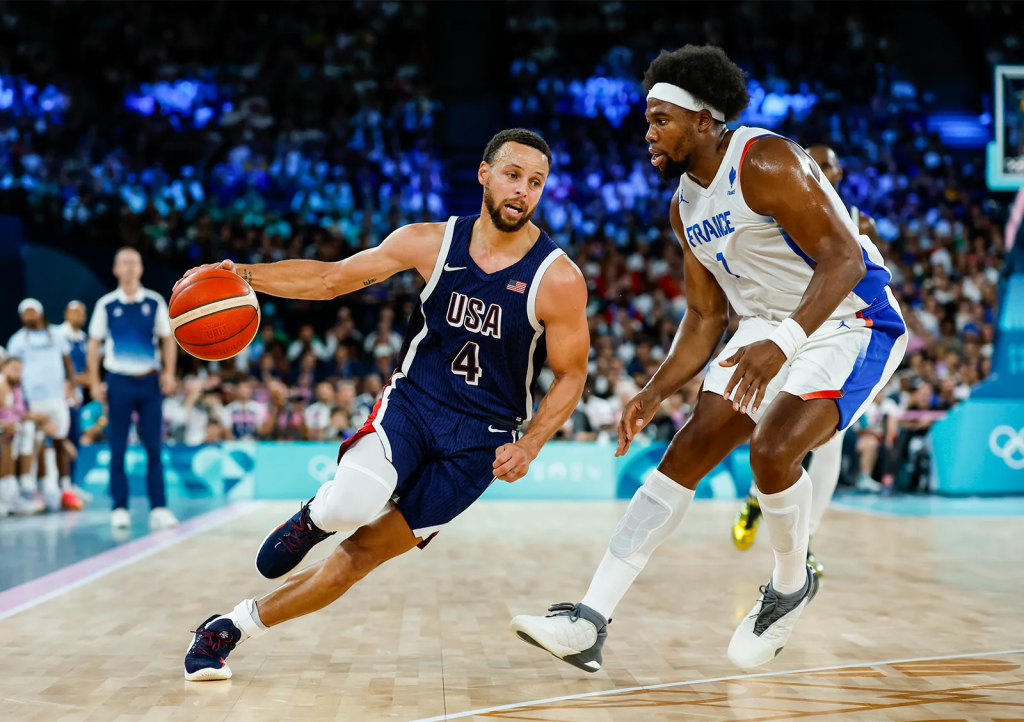
Stephen Curry is 36 years old and still making defensive coordinators look helpless, which at this point in NBA history is less a surprise than a recurring fact of life that nobody has found a solution for.
The three-point shooting is the part everyone talks about, but the way people talk about it tends to flatten what’s actually happening. It’s not just distance, though the distance is genuinely absurd — Curry’s effective shooting range extends several feet beyond where most players would even consider pulling up. It’s the combination of distance, volume, and difficulty. He makes shots off screens while reading a switching defense mid-motion. He makes shots with a hand in his face at the end of a long possession when his legs should be tired. He makes shots that other players don’t attempt in warmups, and he makes them at a percentage that would be impressive if he were shooting from ten feet closer. There’s no real comparison in NBA history. Players who shot from deep before Curry existed, but none of them did it like this, at this scale, this consistently.
The gravity effect is what separates him from every other shooter alive. The moment Curry crosses half-court, something changes in how the defense is arranged. Help defenders shift. Rotations tighten. Players who would normally sit in a passing lane have to account for the possibility that Curry might catch and fire from 30 feet at any moment — because he has, because he will, because leaving him open for two seconds anywhere near the logo is an unacceptable risk. That anxiety creates space for everyone else. Draymond Green’s passing angles open up. Role players catch the ball a step cleaner than they should. A meaningful portion of Golden State’s offense is generated by Curry running off screens on the weak side, not touching the ball, just existing as a problem the defense has to solve.
His recent performances have been sharper than expected given his age and the transitional state of the roster around him. The shot selection has gotten quieter — fewer forced pull-ups in traffic, more patience in the half-court, a willingness to make the simple pass and reset rather than manufacture a shot that isn’t there. That’s not regression. That’s the particular intelligence that comes from having run the same system for fifteen years and understanding exactly what the defense is trying to take away from you. Younger Curry was electric and occasionally reckless. This version is harder to stop because he almost never beats himself.
The supporting cast has changed enough that the burden on him is different than it was during the championship years. Klay Thompson is gone. The second and third options on any given night vary depending on who’s healthy and who’s found their rhythm. Some nights that means Curry is carrying a heavier offensive load than he should have to at 36. Other nights the role players step up and he can operate more efficiently with less volume. The Warriors are still working out which version of themselves shows up consistently, and the answer probably won’t be clear until the playoffs force it.
What hasn’t changed is the feeling his best moments produce — that specific combination of disbelief and inevitability that only a handful of athletes in any era can generate. You’ve seen him make the shot before. You know he’s about to attempt it. You watch him let it go from somewhere that makes no rational sense and you still don’t fully believe it went in until it does.